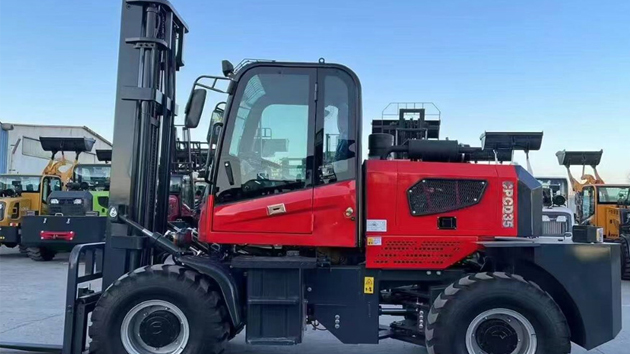
Revolutionizing Heavy-Duty Operations: The Engineering Behind High-Horsepower 4WD Mining Vehicles
2025-08-30 03:05:27
The integration of high-horsepower 4WD operation vehicle systems in mining has transformed extraction efficiency, particularly in open-pit and underground environments. Modern designs prioritize torque distribution and energy recovery, with engines exceeding 500 HP enabling sustained heavy-load operations. For instance, Caterpillar’s 794 AC mining truck utilizes a 4WD configuration to navigate steep inclines while hauling over 300 tons, reducing cycle times by 18% compared to conventional 2WD models.
A critical aspect of these vehicles is their adaptive traction control, which leverages real-time data from terrain sensors to optimize power allocation across axles. In copper mines in Chile, high-horsepower 4WD operation vehicle fleets have reported 22% lower fuel consumption due to intelligent drivetrain management. This is achieved through hydraulic-mechanical transmission systems that minimize wheel slip even on loose substrates, ensuring consistent momentum during excavation and transport phases.
Safety protocols embedded in high-horsepower 4WD operation vehicle architectures include automated stability control and collision avoidance. Data from Australian iron ore sites show a 30% reduction in rollover incidents since adopting these systems. Additionally, regenerative braking technology captures kinetic energy during descent, converting it to electrical power for auxiliary functions—a feature pivotal in extending operational uptime in remote mining locations.
Future developments aim to hybridize these platforms with hydrogen fuel cells, targeting zero emissions without compromising the rugged performance required in mining. Pilot tests in Canadian oil sands operations demonstrate that such innovations could cut carbon footprints by 40% while maintaining the robust output expected from high-horsepower 4WD operation vehicle deployments.