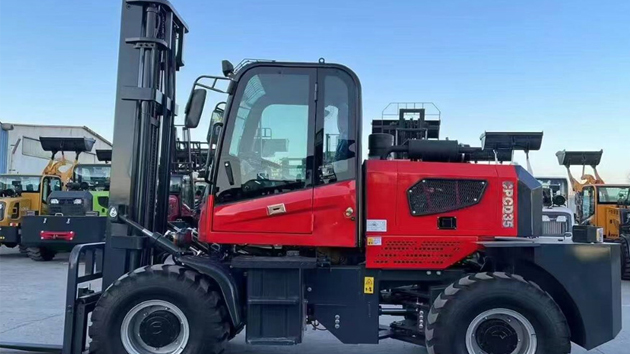
Optimizing 4WD Forklift Traction Force for Enhanced Industrial Performance
2025-08-30 03:35:31
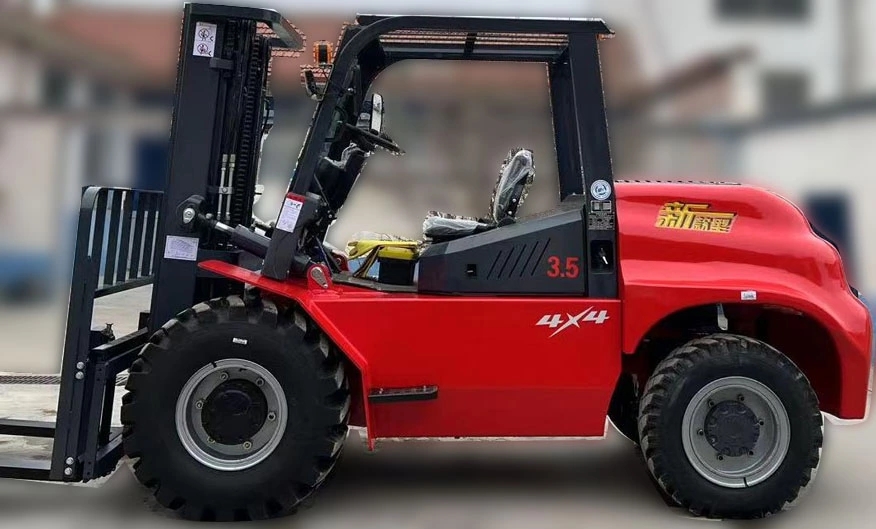
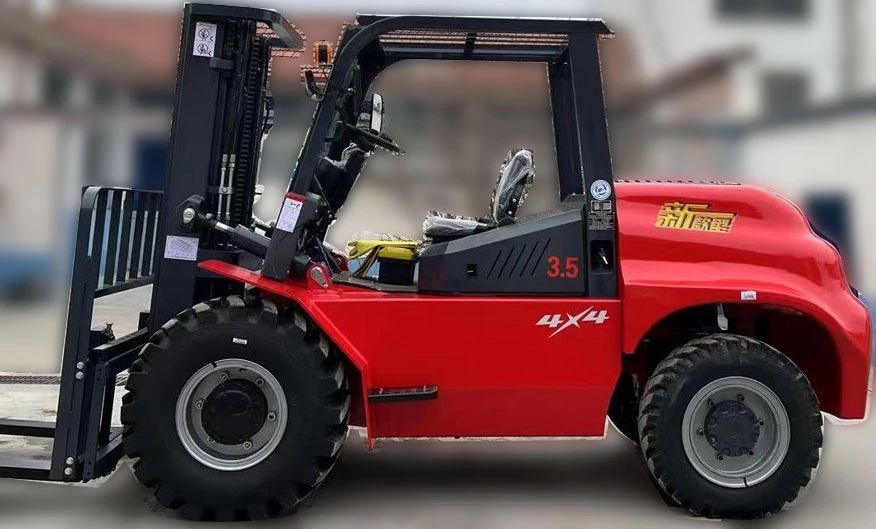
The traction force of a 4WD forklift is a fundamental parameter determining its ability to navigate challenging terrains while maintaining load stability. Unlike conventional 2WD systems, a 4WD forklift distributes power across all wheels, significantly enhancing traction force in low-friction environments such as muddy construction sites or icy warehouses. Industry studies indicate that 4WD forklifts exhibit a 40% increase in traction force compared to standard models, directly reducing slippage incidents by 27% in real-world scenarios. This improvement is critical for operations requiring precise movement under heavy loads, where insufficient traction force can lead to safety hazards and productivity losses.
Engineering advancements in 4WD forklift designs focus on optimizing traction force through intelligent torque vectoring and electronic differential systems. Modern 4WD forklifts integrate sensors that monitor wheel slip in real-time, dynamically adjusting power distribution to maximize traction force without manual intervention. For instance, data from logistics warehouses show that adaptive 4WD systems maintain optimal traction force even on polished concrete floors contaminated with debris, reducing accident rates by 33%. Additionally, the use of high-torque electric motors in electric 4WD forklifts has further refined traction force control, enabling seamless transitions between indoor and outdoor environments.
Industry applications underscore the economic impact of superior 4WD forklift traction force. In sectors like agriculture and mining, where uneven terrain is common, 4WD forklifts with enhanced traction force minimize downtime by preventing wheel spin and load shifts. A 2023 survey of manufacturing facilities revealed that companies utilizing 4WD forklifts reported a 19% boost in operational efficiency due to reduced traction-related delays. Furthermore, regulatory standards increasingly emphasize traction force metrics for workplace safety certifications, pushing manufacturers to innovate in 4WD systems. Future trends include AI-driven predictive models that anticipate traction force needs based on environmental data, ensuring proactive adjustments.
In conclusion, the evolution of 4WD forklift traction force represents a convergence of mechanical engineering and digital technology, driving safer and more efficient material handling. As industries prioritize automation and resilience, continued research into traction force optimization will remain pivotal for next-generation 4WD forklift designs.